1. It is central to a Muslim's identity and practice of the Islamic faith because it proclaims the belief in the oneness of Allah and that Muhammad is his prophet.
2. It allows them to participate in a worldwide fellowship.
3. It shows that they believe that those who have much should help lift the burden of those who are less fortunate.
4. Those who fast are able to relate to people who endure hunger everyday. Fasting underscores the creature's dependence on God. It calls one back to one's frailty and dependence. It also sensitizes compassion.
5. I think the hajj is a pillar of the Islamic faith because it strengthens people's devotion to God. This practice is different from other world religions because most world religions do not make it a fundamental requirement to venture off to a holy site. There are sites that tie back to the importance of the religion's practices, but there isn't a place that followers have to visit. The hajj is similar to some world religions Mecca symbolizes a holy site where followers pay their respects, just like other religions honor holy sites for their religious devotion.
6. I think praying five times a day is a challenge this day and age because people may not always be in the right situation to come out and pray. Fasting is a challenge because there are so many tempting places to help satisfy the cravings.
Tuesday, April 30, 2013

Sunday, April 28, 2013
Names of God
The title “The
Compassionate” describes a God who exudes endless amounts of love for his
children. He will do anything for the sake of each person’s well being. Despite
our constant mistakes, he never fails to cast His love upon us. His kind spirit
is seen in the daily blessings and miracles we experience. He is compassionate
for giving us the blessing so of free will and intellect. He did not have to
give us the freedom to think and act on our own. In doing so, he risked
receiving devout obedience from us. In spite of it all, God still bestowed us
with the capacity to be in control of our lives. And even though we are
extremely vulnerable to sin, he still accepts us when we sin and hurt Him. He
welcomes us with warm arms because he has unconditional love for us.
The title “The All-Knowing” is feminine because mothers
are seen to be the comforter who knows the answer to everything. Mothers hold a
role where they serve as the caretaker for all. In order to be a caretaker, one
has to be capable to tackle the many occurrences that can conflict one’s
family. A mother knows when to choose sternness over lightheartedness in a
situation. She knows how to advise her children so they can be on the right
path. Her sole intent is to see her kids perform at their best so they can
fulfill God’s plan. In that, she has to be aware of many things so they can
make God happy. In relation, God is a caretaker for his children. Being a
caretaker makes him all-knowing. In order for Him to propel us in a positive
direction God has to be aware of everything.
The title “The Sovereign” defines someone who is in
control over their power. To be sovereign is to have control over one’s
affairs. One who is sovereign is all-powerful over a specific subject. Traditionally,
men are viewed to be the all-powerful characters in society. In the past and in
today’s world, it is more common to see men in the powerful positions.
Naturally, many people see men as the ones who have the leverage to speak words
into action. Men are able to make things happen because they embody strength in
performance. They are able to physically move things, but they are able to
support and maintain units (families, companies, or countries). A man is
supposed to use his power to generate prosperity. Like the shared view of men’s
sovereignty, God is sovereign in his Creation. He has power over His creation
and He is in full ownership of his power. No one is able to take his power
because of the strong immensity it holds. He uses his power so he can ensure
His desired vision for humanity. If He does not utilize His power, then our
true potential would not be feasible.
The title “The Protector” instantly speaks masculinity.
Men are viewed as the protectors of the children and women. Their strength is
the power that enables them to produce security. Men provide security through
their protection from harm. Men serve as the ones who will fend for their
beloveds. They are physically strong, so their bodies make it possible for them
to protect people from violence. But they also provide security through
financial assistance. In the past, men were seen as the ones who made the money
to bring home to the family. Their efforts made it possible for the family to
eat and enjoy being a strong unit. Men are also seen as the ones who protect
their children before they go out into the world as adults. They advise and
shield their children so they can grow into dignifies people. Like modern men,
God is the protector for all of his Creation. He makes it possible for nature
to flourish and nourish the bodies of human beings. He ensures the vitality of
every human life. He uses that spirit to engulf us in his grace so we can live
out His plan for us.
“The Compassionate”, “The All-Knowing”, “The Sovereign”,
and “The Protector” accurately refer to the same God because He is a God of
many attributes. God is our mother and father in one. He serves as the source
of warmness when we need assurance. He is omniscient in his ability to guide us
down the correct path. He is omnipotent so he can live in a world that is up to
his standards. He is protective of his children because we are His flock and we
shall follow according to His will. God is the light, the way, and the path. He
is a melting pot of many attributes because he reflects the humane qualities
that make up our beings.
Tuesday, April 23, 2013
Islam Webquest
Task #1
1. 2.1 billion people
2. Afghanistan, Algeria, Azerbaijan, Bangladesh, Comoros, Djibouti, Egypt, Gambia, Guinea, and Indonesia.
3. Indonesia has the most Muslims.
4. There are 2,595,000 Muslims in the United States.
Task #2
1. Muslims must believe in one God.
2. They must believe in the angels of God.
3. They must believe in the books of God, especially the Koran.
4. They must believe in the prophets of God, especially Muhammad.
5. They must believe in the Day of Judgement.
6. They must believe in the supremacy of God's will.
The best struggle is when someone sacrifices his well being for the sake of Allah.
God is more forgiving to his creation than a mother is to her child.
A perfect Muslim is someone who uses their words and actions to keep humanity safe.
Task #3
1. The Koran provides human beings with wisdom, doctrine, worship, transactions, law, etc. It also establishes what a good relationship with God looks like. It also provides guidelines and detailed teachings for a just society, proper human conduct, and an equitable economic system.
2. The Koran exists only in Arabic.
3. It was sent down during the month of Ramadan.
4. The angel Gabriel commanded Muhammad to read and he said that he was not a reader. So the angel Gabriel taught him some verses from the Koran and Muhammad memorized them.
Task #4
1. The Five Pillars of Faith: Testimony of faith, prayer, almsgiving, fasting. and pilgrimage. In order to perform the Testimony of Faith one must recite the quote, "There is no god but Allah, and Muhammad is the messenger of Allah." Muslims pray five times a day. The prayer can be recited anywhere, and they must face Mecca. Almsgiving is a way to care for the poor. Fasting is done so Muslims can reflect on their spiritual lives. In doing this they can repent for their sins and dedicate themselves back to Allah. The pilgrimage to Mecca is seen as an expression of devout faith.
2. They are important because they will strengthen their faith and service to Allah.
3. It's impossible to cheat on the Five Pillars because each person is in submission to God, making it necessary that they devote themselves fully.
4. The Five Pillars is similar to Christianity because Christians are expected to pray, to give to the poor, to recite a creed, and to fast during Lent.
Task #5
1. Ramadan is the ninth month of the Muslim year, in which the Qur'an was sent down as a guidance for the people. Muslims show their acknowledgement by fating during daylight hours.
2. They are not allowed to eat or drink during daylight hours. Smoking and sexual relations are also forbidden during fasting. At the end of the day, the fast is broken with prayer and a meal called the iftar. In the evening following the iftar it is customary for Muslims to go out visiting family and friends.
3. It can be destroyed by the telling of a lie, slander, denouncing someone behind his back, a false oath, and greed or covetousness.
4. Muslims celebrate the Lavlat-al-Qadr (the Night of Power).
5.It is celebrated for three days in a holiday called Id-al-Fitr (the Feast of Fast Breaking).gggg
6. The Koran was first revealed in this month, the gates of heaven are open, and the gates of Hell are closed and the devils are chained up in hell.
7. The devils have been chained in Hell, so he can't tempt believers.
Task #6
1. The star and the crescent symbol originally came from the Ottoman empire.
2. White, black, green, and red are dominate colors for Arab flags.
3. Green is an important color in Islam.
4. Islamic art is not restrained to religious subjects like Christianity.
5. Islamic art focuses on the spiritual representation of objects and beings, and not their physical qualities.
6. . Islamic divorce rules favor men.
7. The Muslim call to prayer are the first words a newborn Muslim baby should hear.
8.The baby's first taste should be something sweet.
9. After seven days, the baby's head is shaved.
10. It is tradition to choose the baby's name on the seventh day.
1. 2.1 billion people
2. Afghanistan, Algeria, Azerbaijan, Bangladesh, Comoros, Djibouti, Egypt, Gambia, Guinea, and Indonesia.
3. Indonesia has the most Muslims.
4. There are 2,595,000 Muslims in the United States.
Task #2
1. Muslims must believe in one God.
2. They must believe in the angels of God.
3. They must believe in the books of God, especially the Koran.
4. They must believe in the prophets of God, especially Muhammad.
5. They must believe in the Day of Judgement.
6. They must believe in the supremacy of God's will.
The best struggle is when someone sacrifices his well being for the sake of Allah.
God is more forgiving to his creation than a mother is to her child.
A perfect Muslim is someone who uses their words and actions to keep humanity safe.
Task #3
1. The Koran provides human beings with wisdom, doctrine, worship, transactions, law, etc. It also establishes what a good relationship with God looks like. It also provides guidelines and detailed teachings for a just society, proper human conduct, and an equitable economic system.
2. The Koran exists only in Arabic.
3. It was sent down during the month of Ramadan.
4. The angel Gabriel commanded Muhammad to read and he said that he was not a reader. So the angel Gabriel taught him some verses from the Koran and Muhammad memorized them.
Task #4
1. The Five Pillars of Faith: Testimony of faith, prayer, almsgiving, fasting. and pilgrimage. In order to perform the Testimony of Faith one must recite the quote, "There is no god but Allah, and Muhammad is the messenger of Allah." Muslims pray five times a day. The prayer can be recited anywhere, and they must face Mecca. Almsgiving is a way to care for the poor. Fasting is done so Muslims can reflect on their spiritual lives. In doing this they can repent for their sins and dedicate themselves back to Allah. The pilgrimage to Mecca is seen as an expression of devout faith.
2. They are important because they will strengthen their faith and service to Allah.
3. It's impossible to cheat on the Five Pillars because each person is in submission to God, making it necessary that they devote themselves fully.
4. The Five Pillars is similar to Christianity because Christians are expected to pray, to give to the poor, to recite a creed, and to fast during Lent.
Task #5
1. Ramadan is the ninth month of the Muslim year, in which the Qur'an was sent down as a guidance for the people. Muslims show their acknowledgement by fating during daylight hours.
2. They are not allowed to eat or drink during daylight hours. Smoking and sexual relations are also forbidden during fasting. At the end of the day, the fast is broken with prayer and a meal called the iftar. In the evening following the iftar it is customary for Muslims to go out visiting family and friends.
3. It can be destroyed by the telling of a lie, slander, denouncing someone behind his back, a false oath, and greed or covetousness.
4. Muslims celebrate the Lavlat-al-Qadr (the Night of Power).
5.It is celebrated for three days in a holiday called Id-al-Fitr (the Feast of Fast Breaking).gggg
6. The Koran was first revealed in this month, the gates of heaven are open, and the gates of Hell are closed and the devils are chained up in hell.
7. The devils have been chained in Hell, so he can't tempt believers.
Task #6
1. The star and the crescent symbol originally came from the Ottoman empire.
2. White, black, green, and red are dominate colors for Arab flags.
3. Green is an important color in Islam.
4. Islamic art is not restrained to religious subjects like Christianity.
5. Islamic art focuses on the spiritual representation of objects and beings, and not their physical qualities.
6. . Islamic divorce rules favor men.
7. The Muslim call to prayer are the first words a newborn Muslim baby should hear.
8.The baby's first taste should be something sweet.
9. After seven days, the baby's head is shaved.
10. It is tradition to choose the baby's name on the seventh day.
Sunday, March 17, 2013
Blog Post 22 - Ancient Western Religions
1. It began to flourish in ancient Iran, which was known as Persia. It flourished during the Persian Empire.
2. One Persia was conquered by the Greeks, aspects of Persian culture, including Zoroastrianism, spread far and wide.
3. When he was about thirty year old, an angel called, Good Thought appeared to him and brought him the Wise Lord also known as Ahura Mazda. Zarathustra recognized Ahura Mazda as the one true God, and he began to preach the radical message of monotheism to polytheistic people.
4. The Avesta is the sacred text of Zoroastrianism, and the oldest material in the text is the Gathas. Zarathustra wrote the Gathas.
5. Ahura Mazda is eternal and universal goodness, controlling the cosmos and the destiny of human beings.
6. Ethical dualism is the belief in universal forces of good and evil.
7. The Lie is an evil, cosmic force.
8. Humans must choose between the truth and the Lie, between the beneficent spirit and the hostile spirit.
9. Heaven, or the House of Best Purpose is said to be forever in sunshine, and its inhabitants enjoy the company of the saved. Hell, the Worst Existence, is a foul-smelling, dark place where the tormented are forced to remain completely alone.
10. The traditional Zoroastrian is centered around agriculture. some of its ethical demands include caring for livestock and fields. A follower usually leads a simple life which includes telling the truth and doing what is right. /worship practices include prayer, which is to be done five times a day.
11. Zoroastrians who live in India.
12. The Iliad and the Odyssey.
13. The gods have human attributes. Their moral behavior is much more humanlike than godlike.
14. He was concerned with celebrating Zeus' great power and wisdom. The play Agamemnon explains human suffering as being a necessary part of the divine plan of Zeus.
15. An oracle is a sanctuary favored by a particular god, who communicated in some manner to those who visited the site. The most famous was at Delphi, where the Greeks came to confront Apollo. It had been considered a sacred site from early times and was thought to be the center of the earth.
16. Individuals had to choose to become initiates, and they went though some form of initiation ritual. Initiates experiences a personal encounter with the deity. And initiates gained spiritual renewal through participation in the religion and, as with most mystery religions, hope for a better afterlife.
17. The Eleusinian Mysteries.
18. Dionysus is associated with fertility, vegetation, and specifically the vine. Dionysus is often depicted in Greek art with vines and grapes.
19. Their religious goal is to lea a pure life, through vegetarianism and other ascetic practices, so that the soul might eventually escape the body and fully realize its divine, Dionysian nature.
20. Plato believed that we know things in this life partly because we have experienced them in previous lives. Knowledge, therefore, is recollection.
21. Plato's highly influential perspective that true reality consists of eternal and perect Forms, or ideas, and that the material, bodily world is an imperfect reflection of the world of Forms, dependent on them for all its qualities.
22. Both were called Savior and the intimacy of the worshipers' relationship with Asclepius bore a strong resemblance to the relationship with Christ celebrated by Christians.
23. The numina were supernatural powers, each in charge of a specific function. These powers inhabited a wide variety of spaces, such as fields, streams, trees, doorways, altars, and shrines.
24. Jupiter was the most powerful of all Roman deities.
25. Jupiter, Venus, Mars, Neptune, Mercury, and Saturn.
26. To be closer and more in tune with their selected gods.
27. Mithraism and the mystery religion celebrating the goddess Isis.
28. Osiris was killed and hacked into pieces by his evil brother. Isis searched far and wide, finally finding Osiris's body parts. She mummified him, which brought him back to life. Osiris became god of the underworld.
29. Emperor Augustus encouraged the worship not of himself, but of his genius, or guardian spirit. This focused worship on Rome, because the emperor's genius was thought to guard the welfare of the entire state.
30.They clashed because emperor worship contradicted their belief in only one God. The Romans grew suspicious of the Christians because their refusal to worship on behalf of the emperor implied that they did not support the state.
2. One Persia was conquered by the Greeks, aspects of Persian culture, including Zoroastrianism, spread far and wide.
3. When he was about thirty year old, an angel called, Good Thought appeared to him and brought him the Wise Lord also known as Ahura Mazda. Zarathustra recognized Ahura Mazda as the one true God, and he began to preach the radical message of monotheism to polytheistic people.
4. The Avesta is the sacred text of Zoroastrianism, and the oldest material in the text is the Gathas. Zarathustra wrote the Gathas.
5. Ahura Mazda is eternal and universal goodness, controlling the cosmos and the destiny of human beings.
6. Ethical dualism is the belief in universal forces of good and evil.
7. The Lie is an evil, cosmic force.
8. Humans must choose between the truth and the Lie, between the beneficent spirit and the hostile spirit.
9. Heaven, or the House of Best Purpose is said to be forever in sunshine, and its inhabitants enjoy the company of the saved. Hell, the Worst Existence, is a foul-smelling, dark place where the tormented are forced to remain completely alone.
10. The traditional Zoroastrian is centered around agriculture. some of its ethical demands include caring for livestock and fields. A follower usually leads a simple life which includes telling the truth and doing what is right. /worship practices include prayer, which is to be done five times a day.
11. Zoroastrians who live in India.
12. The Iliad and the Odyssey.
13. The gods have human attributes. Their moral behavior is much more humanlike than godlike.
14. He was concerned with celebrating Zeus' great power and wisdom. The play Agamemnon explains human suffering as being a necessary part of the divine plan of Zeus.
15. An oracle is a sanctuary favored by a particular god, who communicated in some manner to those who visited the site. The most famous was at Delphi, where the Greeks came to confront Apollo. It had been considered a sacred site from early times and was thought to be the center of the earth.
16. Individuals had to choose to become initiates, and they went though some form of initiation ritual. Initiates experiences a personal encounter with the deity. And initiates gained spiritual renewal through participation in the religion and, as with most mystery religions, hope for a better afterlife.
17. The Eleusinian Mysteries.
18. Dionysus is associated with fertility, vegetation, and specifically the vine. Dionysus is often depicted in Greek art with vines and grapes.
19. Their religious goal is to lea a pure life, through vegetarianism and other ascetic practices, so that the soul might eventually escape the body and fully realize its divine, Dionysian nature.
20. Plato believed that we know things in this life partly because we have experienced them in previous lives. Knowledge, therefore, is recollection.
21. Plato's highly influential perspective that true reality consists of eternal and perect Forms, or ideas, and that the material, bodily world is an imperfect reflection of the world of Forms, dependent on them for all its qualities.
22. Both were called Savior and the intimacy of the worshipers' relationship with Asclepius bore a strong resemblance to the relationship with Christ celebrated by Christians.
23. The numina were supernatural powers, each in charge of a specific function. These powers inhabited a wide variety of spaces, such as fields, streams, trees, doorways, altars, and shrines.
24. Jupiter was the most powerful of all Roman deities.
25. Jupiter, Venus, Mars, Neptune, Mercury, and Saturn.
26. To be closer and more in tune with their selected gods.
27. Mithraism and the mystery religion celebrating the goddess Isis.
28. Osiris was killed and hacked into pieces by his evil brother. Isis searched far and wide, finally finding Osiris's body parts. She mummified him, which brought him back to life. Osiris became god of the underworld.
29. Emperor Augustus encouraged the worship not of himself, but of his genius, or guardian spirit. This focused worship on Rome, because the emperor's genius was thought to guard the welfare of the entire state.
30.They clashed because emperor worship contradicted their belief in only one God. The Romans grew suspicious of the Christians because their refusal to worship on behalf of the emperor implied that they did not support the state.
Sunday, March 10, 2013
Judaism Questions
1. It is a house of assembly, a study house, and a house of prayer.
2. In a synagogue, there is an eastern wall where the holy ark is located. Th ark is the place for the Torah and the place for Jews to pray. The ark is above the ner tamid (the eternal light). The parokhet is the curtain that is the central part of the ark. It is designed in numerous ways. When you open the doors to the ark, there is a cabinet that is covered in velvet. This cabinet holds the Sifrei Torah. The Torah Scrolls are covered in cloth mantles. They are considered to be holy objects therefore they can not be thrown out even if they are old and worn out.
3. A rabbi is a teacher of the Torah. He is a religious person who has enough authority to be involved in the issues of Jewish law. There are different approaches to becoming a rabbi depending on which sect a man belongs to. The person must be Jewish. Most rabbis have a college degree and took classes in post-graduate rabbinical studies through a seminary. Unlike a priest, a rabbi has no more power than anyone else to perform certain rituals. The rabbi is the teacher of the Jewish faith.
4. It is a precious gift from G-d when Jews are able to push aside their worries and dedicate their lives to "higher pursuits" (Jewish Virtual Library).
5. The Torah refers to the Five Books of the Moses. But is can also refer to the whole Jewish bible. It includes all Jewish law and tradition. The Talmud contains the oral parts.
6. Orthodox Jews believe that the Torah G-d presented to Moses on Mt. Sinai stayed the same. They abide by laws of the Torah. Reform Judaism upholds the idea that the Torah was compiled over centuries, rather than being delivered at one time. It also states that individuals are supposed to change and grow, making them free to decide what to believe. Their worship services are in English rather than Hebrew. Conservative Jews believe humans had an influence in the writings of the Bible. They believe that it cam from G-d, but they also believe that humans have some impact on the Bible's writings. that there was a human part in addition to the writings written by G-d. Some Conservative worship services are similar to Reform and others are close to Orthodox. Zionist Jews believe that their homeland resides back in Palestine.
7. Hebrew is the language of the early Jews. It is spoken by 5 million people in Israel.
8. Yiddish was the main language of Ashkenazic Jes in the shtetl. Mostly ordinary spoke this language, instead of scholars so it weak in describing items and abstractions. But it does contain numerous amounts of words and expressions that can be used to describe people and relationships.
9. Mazal Tov means "Congratulations". Shalom means "Hello" or "Peace" or "Goodbye". Mitzvah means "commandment" or "son of commandment".
10. Bris is the ceremony of circumcision. It is when the baby boy enters the Covenant of Israel on his eighth day. A Bar Mitzvah is when a boy becomes the "age of responsibility for the commandments". A girl becomes a Bat Mitvah at the age of twelve. Jewish marriage is confirmed through the Kiddushin (betrothal) and Nisu'in (marriage). Te'naim (conditions for the marriage) are assembled and signed at a ceremony before the wedding. Jewish weddings are not held on the Shabbat because two celebratory occasions should not be celebrated simultaneously. The wedding is held under a chupah (a canopy). During the ceremony, the couple signs a ketucah. It is a certification that ensures the woman's well being if her husband dies or if she goes through divorce.
11. Rosh Hashanah means "head of the year" in Hebrew. It is considered to be the Jewish New Year. Yom Kippur takes place on the 10th day of Tishri. It means "Day of Atonement". It is the day when people's deeds and names are saved. In response to this occurrence, it is the last day to change one's judgement and ask for mercy. Hanukah is known as the festival of lights. It is the Jewish festival of re-dedication. Passover commemorates the Exodus from Egypt. It means to "pass through" or "pass over".
12. I knew that Jews celebrated Passover to honor the Israelites' triumphs over their trials on Egypt.
13. I was surprised to learn that Hanukah was not as big as I thought it was. I guess since it is one of the more widely known holidays, I presumed to think that it was a very important holiday.
15. In my life, Rosh Hashanah is similar to New Year's Day. Like Rosh Hashanah, New Year's symbolizes a day of new beginnings and prosperity in the new year.
2. In a synagogue, there is an eastern wall where the holy ark is located. Th ark is the place for the Torah and the place for Jews to pray. The ark is above the ner tamid (the eternal light). The parokhet is the curtain that is the central part of the ark. It is designed in numerous ways. When you open the doors to the ark, there is a cabinet that is covered in velvet. This cabinet holds the Sifrei Torah. The Torah Scrolls are covered in cloth mantles. They are considered to be holy objects therefore they can not be thrown out even if they are old and worn out.
3. A rabbi is a teacher of the Torah. He is a religious person who has enough authority to be involved in the issues of Jewish law. There are different approaches to becoming a rabbi depending on which sect a man belongs to. The person must be Jewish. Most rabbis have a college degree and took classes in post-graduate rabbinical studies through a seminary. Unlike a priest, a rabbi has no more power than anyone else to perform certain rituals. The rabbi is the teacher of the Jewish faith.
4. It is a precious gift from G-d when Jews are able to push aside their worries and dedicate their lives to "higher pursuits" (Jewish Virtual Library).
5. The Torah refers to the Five Books of the Moses. But is can also refer to the whole Jewish bible. It includes all Jewish law and tradition. The Talmud contains the oral parts.
6. Orthodox Jews believe that the Torah G-d presented to Moses on Mt. Sinai stayed the same. They abide by laws of the Torah. Reform Judaism upholds the idea that the Torah was compiled over centuries, rather than being delivered at one time. It also states that individuals are supposed to change and grow, making them free to decide what to believe. Their worship services are in English rather than Hebrew. Conservative Jews believe humans had an influence in the writings of the Bible. They believe that it cam from G-d, but they also believe that humans have some impact on the Bible's writings. that there was a human part in addition to the writings written by G-d. Some Conservative worship services are similar to Reform and others are close to Orthodox. Zionist Jews believe that their homeland resides back in Palestine.
7. Hebrew is the language of the early Jews. It is spoken by 5 million people in Israel.
8. Yiddish was the main language of Ashkenazic Jes in the shtetl. Mostly ordinary spoke this language, instead of scholars so it weak in describing items and abstractions. But it does contain numerous amounts of words and expressions that can be used to describe people and relationships.
9. Mazal Tov means "Congratulations". Shalom means "Hello" or "Peace" or "Goodbye". Mitzvah means "commandment" or "son of commandment".
10. Bris is the ceremony of circumcision. It is when the baby boy enters the Covenant of Israel on his eighth day. A Bar Mitzvah is when a boy becomes the "age of responsibility for the commandments". A girl becomes a Bat Mitvah at the age of twelve. Jewish marriage is confirmed through the Kiddushin (betrothal) and Nisu'in (marriage). Te'naim (conditions for the marriage) are assembled and signed at a ceremony before the wedding. Jewish weddings are not held on the Shabbat because two celebratory occasions should not be celebrated simultaneously. The wedding is held under a chupah (a canopy). During the ceremony, the couple signs a ketucah. It is a certification that ensures the woman's well being if her husband dies or if she goes through divorce.
11. Rosh Hashanah means "head of the year" in Hebrew. It is considered to be the Jewish New Year. Yom Kippur takes place on the 10th day of Tishri. It means "Day of Atonement". It is the day when people's deeds and names are saved. In response to this occurrence, it is the last day to change one's judgement and ask for mercy. Hanukah is known as the festival of lights. It is the Jewish festival of re-dedication. Passover commemorates the Exodus from Egypt. It means to "pass through" or "pass over".
12. I knew that Jews celebrated Passover to honor the Israelites' triumphs over their trials on Egypt.
13. I was surprised to learn that Hanukah was not as big as I thought it was. I guess since it is one of the more widely known holidays, I presumed to think that it was a very important holiday.
15. In my life, Rosh Hashanah is similar to New Year's Day. Like Rosh Hashanah, New Year's symbolizes a day of new beginnings and prosperity in the new year.
Thursday, February 28, 2013
Buddhism Questions
1. Siddhartha Gautama
2. Old age, disease, death, and an ascetic. The first three sights were penetrating lessons about the reality of suffering and the impermanent nature of life's pleasures. The fourth passing sight filled Gautama with elation and hope.
3. A healthy spiritual life depends on a healthy physical life.
4. He first experienced the First Watch (evening) he perceived his own previous lifetimes. During the Second Watch (middle of the night) he was able to perceive the deaths and rebirths of all living things. During the Third Watch (late night) he discovered the Four Noble Truths.
5. The sangha was the first Buddhist monastic community. Its members are consists of men and women from all walks of life.
6. Buddha, dharma, and sangha.
7. They both regard time as cyclical. They maintain that the universe is eternal. They both believe in samsara.
8. The Buddha dismissed philosophical speculation regarding the nature of the world as being useless for the tasks of winning salvation. He thought sacrificial rituals of devotion to gods were equally useless.
9. Anatta, anicca, and dukkha. Impermanence (anicca) cause human beings to be nothing (anatta), and if there is no self, then there is no need for one to suffer (dukkha) because desires are nonexistent if the self does not exist.
10. Anatta means there is no ultimate reality within, no essence, underlying existence, no eternal substratum that is truly real. It means there is no self. It relates to the concept of Atman because in Hinduism, the goal is to find Atman within and be absorbed in it, as opposed to anatta, which focuses on the idea of there being no self, therefore there is no need to find anything.
11. It is the transference of a bundle of energy, which is patterned according to one's karma. The nature of one's rebirth depends on the status of one's karma.
12. Precepts: 1. Do not take life 2. Do not take what is not given 3. Do not engage in sensuous misconduct. 4. Do not use false speech. 5. Do not drink intoxicants. Other 5: 6. Do not eat after noon. 7. Do not watch dancing or shows. 8. Do not use garlands, perfumes, or ornaments. 9. Do not use a high or soft bed. 10. Do not accept gold silver.
13. It can be translated into "suffering," "frustration," "dislocation," or "discomfort." Dukkha means that things in life are not where they should be, therefore one undergoes suffering due to the misplacement.
14. Tanha is "desire," "thirst," or "craving." We have desires because we are attached to the things, and when we are without those attachments we encounter suffering (dukkha) due to the detachment we face from our pleasures.
15. 1. Right views 2. Right intentions 3. Right speech 4. Right conduct 5. Right livelihood 6. Right effort 7. Right mindfulness 8. Right meditation
16. Buddhas are different from their followers because the do not need a model to provide teachings leading to their awakening. They are able to accomplish their liberation on their own.
17. An arhat is known as the "worthy one" who has become awakened, is forever transformed, having experienced, through the transcendent state of enlightenment.
18. The literal meaning of nirvana is "blowing out." It is hard to describe nirvana because it can;t be understood until it is experienced. The most that can be said is that it is the total cessation of suffering, and thus is absolute peace.
19. The three divisions are Theravada, Mahayana, and Vajrayana.
20. Theravada follows the earlier texts, and thus tends to agree with the original teachings of the Buddha.
21. The literal meaning of Mahayana is the Great Vehicle. The name implies its superiority over Theravada Buddhism. It's the largest division pf Buddhism, claiming well over half the world's Buddhists.
22. Buddhist teachings prescribe shutting off the energy of desire to stop suffering.
23. The Dalai Lama is the head of the lamas institution. The role of acquiring the Dalai Lama is through rebirth. The lineage is believed to continue through the reincarnation of one Dalai Lama into the next. When the Dalai Lama dies, his successor is chosen through various mean such as supernatural things or more mundane things.
24. Cambodia, Sri Lanka, Burma, Thailand, China, Japan, Korea, and Tibet.
2. Old age, disease, death, and an ascetic. The first three sights were penetrating lessons about the reality of suffering and the impermanent nature of life's pleasures. The fourth passing sight filled Gautama with elation and hope.
3. A healthy spiritual life depends on a healthy physical life.
4. He first experienced the First Watch (evening) he perceived his own previous lifetimes. During the Second Watch (middle of the night) he was able to perceive the deaths and rebirths of all living things. During the Third Watch (late night) he discovered the Four Noble Truths.
5. The sangha was the first Buddhist monastic community. Its members are consists of men and women from all walks of life.
6. Buddha, dharma, and sangha.
7. They both regard time as cyclical. They maintain that the universe is eternal. They both believe in samsara.
8. The Buddha dismissed philosophical speculation regarding the nature of the world as being useless for the tasks of winning salvation. He thought sacrificial rituals of devotion to gods were equally useless.
9. Anatta, anicca, and dukkha. Impermanence (anicca) cause human beings to be nothing (anatta), and if there is no self, then there is no need for one to suffer (dukkha) because desires are nonexistent if the self does not exist.
10. Anatta means there is no ultimate reality within, no essence, underlying existence, no eternal substratum that is truly real. It means there is no self. It relates to the concept of Atman because in Hinduism, the goal is to find Atman within and be absorbed in it, as opposed to anatta, which focuses on the idea of there being no self, therefore there is no need to find anything.
11. It is the transference of a bundle of energy, which is patterned according to one's karma. The nature of one's rebirth depends on the status of one's karma.
12. Precepts: 1. Do not take life 2. Do not take what is not given 3. Do not engage in sensuous misconduct. 4. Do not use false speech. 5. Do not drink intoxicants. Other 5: 6. Do not eat after noon. 7. Do not watch dancing or shows. 8. Do not use garlands, perfumes, or ornaments. 9. Do not use a high or soft bed. 10. Do not accept gold silver.
13. It can be translated into "suffering," "frustration," "dislocation," or "discomfort." Dukkha means that things in life are not where they should be, therefore one undergoes suffering due to the misplacement.
14. Tanha is "desire," "thirst," or "craving." We have desires because we are attached to the things, and when we are without those attachments we encounter suffering (dukkha) due to the detachment we face from our pleasures.
15. 1. Right views 2. Right intentions 3. Right speech 4. Right conduct 5. Right livelihood 6. Right effort 7. Right mindfulness 8. Right meditation
16. Buddhas are different from their followers because the do not need a model to provide teachings leading to their awakening. They are able to accomplish their liberation on their own.
17. An arhat is known as the "worthy one" who has become awakened, is forever transformed, having experienced, through the transcendent state of enlightenment.
18. The literal meaning of nirvana is "blowing out." It is hard to describe nirvana because it can;t be understood until it is experienced. The most that can be said is that it is the total cessation of suffering, and thus is absolute peace.
19. The three divisions are Theravada, Mahayana, and Vajrayana.
20. Theravada follows the earlier texts, and thus tends to agree with the original teachings of the Buddha.
21. The literal meaning of Mahayana is the Great Vehicle. The name implies its superiority over Theravada Buddhism. It's the largest division pf Buddhism, claiming well over half the world's Buddhists.
22. Buddhist teachings prescribe shutting off the energy of desire to stop suffering.
23. The Dalai Lama is the head of the lamas institution. The role of acquiring the Dalai Lama is through rebirth. The lineage is believed to continue through the reincarnation of one Dalai Lama into the next. When the Dalai Lama dies, his successor is chosen through various mean such as supernatural things or more mundane things.
24. Cambodia, Sri Lanka, Burma, Thailand, China, Japan, Korea, and Tibet.
Saturday, February 9, 2013
Introduction to Buddhism
The Buddha was born as Siddhartha Gautama in Nepal. He was born into wealth. His family was a royal family of a small kingdom of the Indian-Nepalese border. He had a comfortable upbringing, but his attachment to material things was disrupted when he discovered old age, sickness, and death. His exposure to such morbid views caused him to question the meaning of life. His reaction to the world's sadness inspired him to leave his kush life and adopt the traditional Indian path of the wandering holy man. The goal was to find the Truth of life. His new conversion of life transformed him into a devotee of meditation. After a while, he lived out ascetic practices. He was so devoted to his lifestyle that he began to starve himself. Despite his mission in engaging in various methods, he wasn't able to solve the mystery of life and death. He came to realize that he needed to try something different. So he decided to look into his heart and mind, where he used direct experience and intuition to be his guide to the Truth. In order to reach Enlightenment, he sat under a pipal tree for 40 days. After the extended days, he finally reached Freedom. Throughout the the 45 years of his life, the Buddha traveled through India to spread his understanding. His influence touched all types of people, resulting in some of his disciples reaching Enlightenment. He is seen as a model for Buddhists to emulate in order to reach Enlightenment.
The 'Three Jewels' are seen as integral ideals in Buddhism. They consist of the Buddha, Dharma, and Sangha. Incorporating these three jewels is the key to becoming a Buddha. The Buddha is the yellow jewel and it refers to Buddha and Buddhahood. Going for refuge to the Buddha is using him as your model in your life. Engaging in this allows you to accomplish Buddhahood. The goal of this is to coherently view the nature of reality. Dharma refers to the teachings of the Buddha. It is also the teaching that was created when the Buddha actualized his knowledge and taught it to others (his Enlightenment). Dharma is also the practices that are written down in the scriptures. The Sangha is the spiritual community. It also pertains to the people you share your spiritual live with.The support and guidance of other people will help you reach your path towards Enlightenment.
The Threefold Way consists of ethics, meditation, and wisdom. The ethical code known as Five Percepts are 'principles of training'. Wisdom will help you understand reality. Meditation helps transform the mind. It also helps bring about concentration, clarity, emotional positivity, and a clear view of reality.
The first noble truth is that "All existence is dukkha". This idea focuses on the sufferings of life. Existence is difficult, and it brings hardships and suffering. The second truth is that we suffer because we have desires. The third truth is that in order to stop our suffering, we need to eliminate our desires. Lastly, in order to eliminate our desires we need to follow the Noble Eightfold Path.
The Eightfold Path consists of: 1. Right Understanding or Perfect Vision 2. Right Resolve or PErfect Emotion 3. Right Speech or Perfect Speech 4. Right Action or Perfect Action 5. Right Livelihood or Perfect Livelihood 6. Right Effort or Perfect Effort 7. Right Mindfulness or Perfect Awareness 8. Right Mindness or Perfect Samadhi. It serves as a source of guidance and wisdom to live our lives.
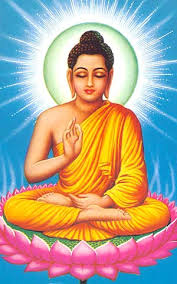
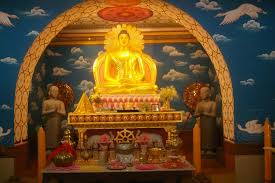

The 'Three Jewels' are seen as integral ideals in Buddhism. They consist of the Buddha, Dharma, and Sangha. Incorporating these three jewels is the key to becoming a Buddha. The Buddha is the yellow jewel and it refers to Buddha and Buddhahood. Going for refuge to the Buddha is using him as your model in your life. Engaging in this allows you to accomplish Buddhahood. The goal of this is to coherently view the nature of reality. Dharma refers to the teachings of the Buddha. It is also the teaching that was created when the Buddha actualized his knowledge and taught it to others (his Enlightenment). Dharma is also the practices that are written down in the scriptures. The Sangha is the spiritual community. It also pertains to the people you share your spiritual live with.The support and guidance of other people will help you reach your path towards Enlightenment.
The Threefold Way consists of ethics, meditation, and wisdom. The ethical code known as Five Percepts are 'principles of training'. Wisdom will help you understand reality. Meditation helps transform the mind. It also helps bring about concentration, clarity, emotional positivity, and a clear view of reality.
The first noble truth is that "All existence is dukkha". This idea focuses on the sufferings of life. Existence is difficult, and it brings hardships and suffering. The second truth is that we suffer because we have desires. The third truth is that in order to stop our suffering, we need to eliminate our desires. Lastly, in order to eliminate our desires we need to follow the Noble Eightfold Path.
The Eightfold Path consists of: 1. Right Understanding or Perfect Vision 2. Right Resolve or PErfect Emotion 3. Right Speech or Perfect Speech 4. Right Action or Perfect Action 5. Right Livelihood or Perfect Livelihood 6. Right Effort or Perfect Effort 7. Right Mindfulness or Perfect Awareness 8. Right Mindness or Perfect Samadhi. It serves as a source of guidance and wisdom to live our lives.
Subscribe to:
Comments (Atom)